
Introduction
Rail fleet managers face a persistent challenge: railcar coatings that fail prematurely, forcing costly repainting cycles every 3-5 years instead of the expected 15-20. The culprit usually isn't the paint itself but what happens before the first drop of coating touches the steel.
Surface preparation is the single most critical factor in coating performance. Industry data reveals that approximately 80% of all coating failures stem from inadequate surface preparation, not from coating defects or application errors.
For railcars operating in harsh environments—chemical exposure, mechanical abrasion, temperature extremes, and corrosive de-icing salts—the quality of surface prep directly determines whether your coating investment lasts 5 years or 20.
This guide covers the technical standards, preparation methods, and best practices that rail fleet managers, maintenance supervisors, and contractors need to achieve long-lasting coatings and maximize asset lifespan.
TL;DR
- Surface prep removes rust, mill scale, and old coatings while creating optimal texture for adhesion
- SSPC-SP standards define cleanliness levels from solvent cleaning (SP 1) to white metal blasting (SP 5)
- Proper surface prep extends coating life from 3-5 years to 15-20 years
- Method selection depends on railcar type, substrate condition, and coating requirements
What Is Railcar Surface Preparation?
Surface preparation uses mechanical or chemical methods to treat railcar steel before coating. Unlike simple cleaning, preparation does two things: removes all contaminants that prevent coating adhesion AND creates the right surface texture—called the anchor profile—for the coating to mechanically grip.
This microscopic surface texture is critical to coating performance:
- Anchor profile depth: Measured in mils (thousandths of an inch)
- Railcar specification range: Typically 1.5 to 3.0 mils
- Mechanical bonding: Roughness allows liquid coatings to flow into valleys and lock onto steel
- Adhesion strength: Creates bonds far stronger than coatings on smooth surfaces
Key distinction: Surface cleaning removes visible contamination. Surface preparation removes contamination and profiles the metal substrate to create optimal coating adhesion conditions.
Why Surface Preparation Is Critical for Railcars
The 80% Rule
The statistics are sobering. According to major coating manufacturers, inadequate surface preparation causes 80% of coating failures, not coating defects or environmental factors. For rail fleet managers, this means that cutting corners on surface prep is the fastest way to guarantee premature coating failure.
Service Life Impact
The difference between proper and inadequate preparation is measured in decades, not years:
- Poor preparation (hand tool cleaning only): Coating failure within 1-3 years
- Adequate preparation (commercial blast cleaning): 5-10 year coating life
- Proper preparation (near-white or white metal blast): 15-20+ year coating life
Comparative studies on heavy structural steel demonstrate that coating systems applied over poorly prepared surfaces failed within one year, while identical systems applied over properly blasted surfaces maintained integrity for 20 years.

Operating Environment Stressors
Railcars face brutal conditions that test coating durability:
- Chemical exposure from commodities like molten sulfur, acids, and fertilizers
- Mechanical abrasion from loading/unloading operations and ballast impact
- Temperature extremes causing thermal expansion and contraction cycles
- De-icing salts that accelerate corrosion and cause osmotic blistering
Without proper surface preparation creating maximum coating adhesion, these stressors rapidly compromise coating integrity.
Warranty and Compliance Implications
These harsh operating conditions explain why proper preparation matters beyond just performance—it affects your bottom line and legal standing.
Most coating manufacturers explicitly void warranties if specified surface preparation standards aren't documented and followed. Environmental regulations increasingly require specific surface prep methods that minimize VOC emissions and comply with OSHA silica dust limits, making proper preparation both a quality and compliance issue.
How Railcar Surface Preparation Works
Assessment and Planning
Effective surface preparation starts with evaluating three critical factors:
- Existing coating condition - Is the coating intact, failing, or completely broken down?
- Substrate corrosion level - Light surface rust or heavy pitting and scale?
- Coating system requirements - What cleanliness standard does the new coating specify?
This assessment determines which SSPC standard to follow and what preparation methods will deliver the best results.
The evaluation guides your entire preparation strategy, from selecting the right blasting method to choosing appropriate abrasive media.
Contaminant Removal Methods
SSPC-SP Standards Range
Surface preparation methods range from simple cleaning to complete coating removal:
SSPC-SP 1 (Solvent Cleaning)
- Removes oil, grease, and soluble contaminants
- Required first step before any abrasive blasting
- Prevents embedding contaminants into the surface profile
SSPC-SP 2/SP 3 (Hand/Power Tool Cleaning)
- Removes loose rust, mill scale, and old coatings
- Used only for minor spot repairs where blasting isn't feasible
- Does not create adequate anchor profile for most coatings
SSPC-SP 6 (Commercial Blast Cleaning)
- Removes all visible contaminants except staining (up to 33% allowed)
- Standard for railcar exterior coatings
- Creates proper anchor profile for most coating systems
SSPC-SP 10 (Near-White Blast Cleaning)
- Removes 95% of visible contaminants (5% staining allowed)
- Required for hopper car interiors and high-performance linings
- Provides superior anchor profile for demanding applications
SSPC-SP 5 (White Metal Blast Cleaning)
- 100% removal of all visible contaminants
- Required for tank car interiors in immersion or corrosive service
- Highest standard, most expensive, necessary for maximum coating life

Abrasive Blasting: The Gold Standard
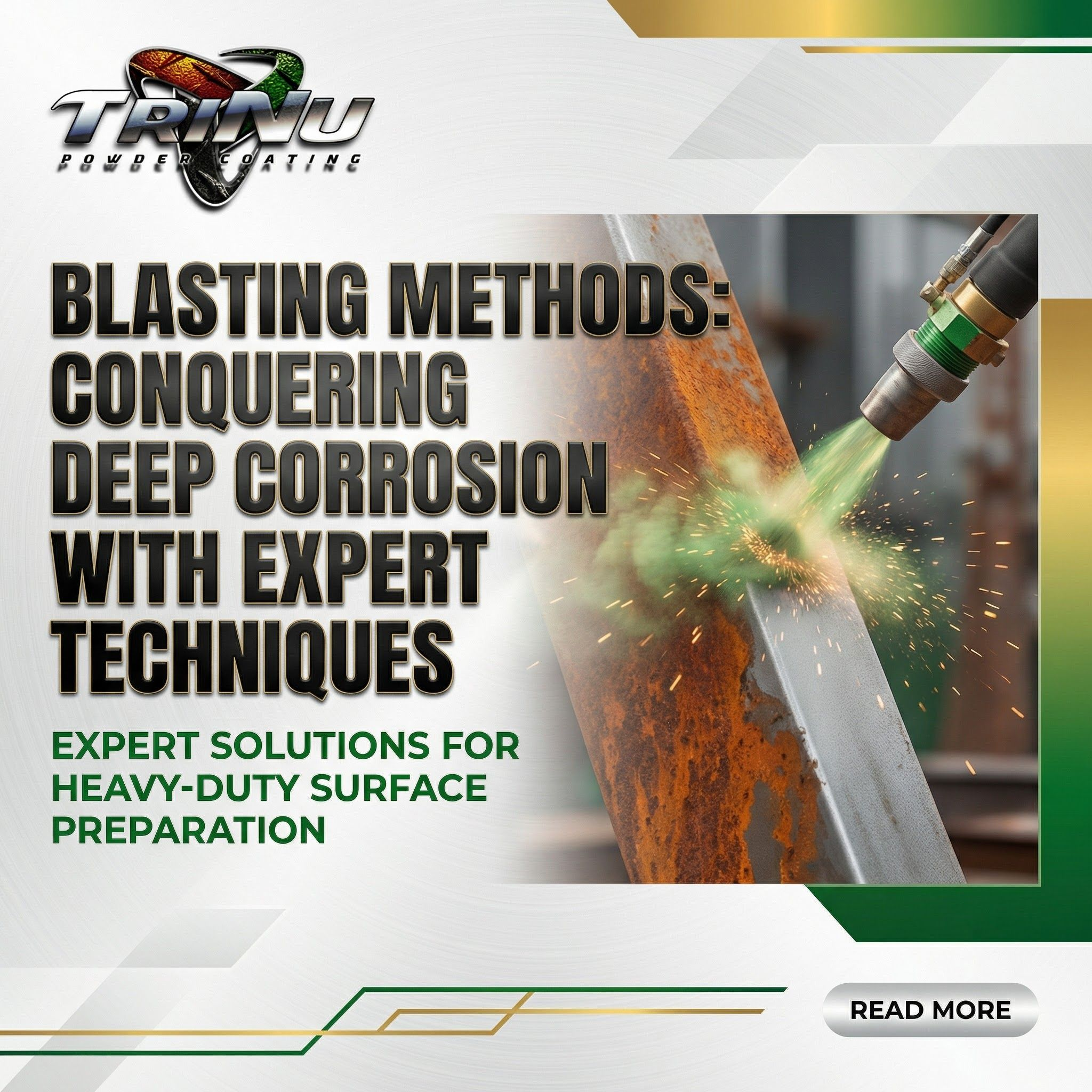
Abrasive blasting cleans and profiles the surface, making it the preferred method for railcar preparation. Common abrasive media include:
- Steel grit - Durable, recyclable, aggressive cleaning and profiling
- Garnet - Clean uniform profile, lower dust generation
- Aluminum oxide - Very hard, creates deep profiles for thick coatings
Professional media blasting services like those offered by TriNu Powder Coating ensure proper abrasive selection and application technique for consistent results across marine, architectural, and industrial applications.
Surface Profile Creation
The anchor profile depth must match coating requirements:
- 1.5-2.0 mils - Standard for most railcar exterior coatings
- 2.0-3.0 mils - Thicker linings for hopper car interiors
- Verification required - Use replica tape (ASTM D4417) to measure and document profile depth
Too shallow a profile results in poor adhesion and peeling. Too deep a profile can cause peaks to protrude through primer, creating pinpoint rusting.

Post-Blast Inspection and Coating Window
Once blasted, bare steel reacts quickly with moisture and oxygen. Industry best practice requires priming within 8 hours of blasting to prevent flash rust formation.
Any visible flash rust requires re-blasting before coating application. During this critical window, environmental conditions must be carefully controlled:
- Surface temperature must be at least 5°F above dew point
- Relative humidity should not exceed 85%
- Minimum surface temperature typically 40°F (varies by coating)
Environmental Controls
Modern surface preparation requires:
- Dust containment - Blast rooms or tenting to meet EPA air quality standards
- Abrasive recycling - Recovery systems that reduce waste and costs
- Proper disposal - Spent abrasives containing paint residue may be hazardous waste requiring RCRA-compliant disposal
Key Factors That Affect Surface Preparation Quality
Substrate Condition
Different substrate conditions require different preparation approaches:
- Heavily corroded or pitted steel - Requires near-white or white metal blasting to reach sound metal beneath corrosion
- Light surface rust - May only need commercial blast cleaning or power tool cleaning for spot repairs
- Intact existing coatings - Often need only spot preparation in damaged areas
- Failing coatings - Require complete removal to prevent contamination of the new system
Coating System Requirements
The coating system you'll apply determines the required preparation standard:
- Epoxies and polyurethanes typically require SSPC-SP 10 (near-white) or SP 5 (white metal)
- Standard alkyds may tolerate SSPC-SP 6 (commercial blast)
- Specialty linings often specify white metal blast plus specific anchor profile depths
Always consult the coating manufacturer's technical data sheet for exact surface preparation requirements. Using a lower standard than specified cancels the warranty.
Environmental Conditions
Environmental conditions directly affect preparation quality and coating performance. Temperature requirements include:
- Surface must be 5°F above dew point to prevent moisture condensation
- Minimum 40°F surface temperature for most coatings
- Some epoxies require 50°F or higher for proper cure
Humidity limits:
- Generally, avoid coating application above 85% relative humidity
- High humidity accelerates flash rust formation after blasting
Weather protection:
- Outdoor preparation often requires temporary enclosures or scheduling during favorable weather
Equipment and Abrasive Selection
Equipment and abrasive choices directly impact cleaning efficiency and surface profile quality. Key factors include:
- Properly sized compressors and functioning nozzles
- Correct abrasive type for the substrate and coating system
- Appropriate abrasive size to achieve the specified anchor profile
Undersized equipment or incorrect abrasive selection leads to inadequate cleaning, improper profiles, or extended project timelines.
Operator Skill and Certification
Consistent SSPC standards depend on trained operators who understand proper techniques. Qualified operators know:
- Proper blast patterns and nozzle standoff distance
- How to recognize when the specified cleanliness standard is achieved
- Surface profile measurement and documentation
- Environmental monitoring requirements
Look for SSPC C7 (Abrasive Blaster) certified operators and projects supervised by NACE/AMPP Coating Inspectors (CIP).
Common Mistakes and How to Avoid Them
Even experienced contractors make surface prep mistakes that lead to coating failures. Understanding these common errors helps you avoid costly recoating work and warranty issues down the line.
Skipping Solvent Cleaning
Blasting directly over oily or greasy surfaces embeds these contaminants into the anchor profile, creating a barrier that prevents coating adhesion. Oil trapped beneath the blast profile acts like a release agent—no coating system can bond properly regardless of surface roughness.
Always perform SSPC-SP 1 solvent cleaning before abrasive blasting. This removes oils, greases, and soluble salts that blasting alone cannot eliminate. The extra 30 minutes spent on solvent cleaning prevents adhesion failures that cost thousands in rework.
Selecting the Wrong SSPC Standard
Choosing a preparation standard based on budget rather than coating requirements leads to predictable problems:
- Over-preparation wastes money on unnecessary blast time and media
- Under-preparation causes premature coating failure requiring complete recoating
- Mismatched standards void manufacturer warranties immediately
Match your prep standard to the coating manufacturer's specifications. If the data sheet specifies SP 10 (near-white metal), don't substitute SP 6 (commercial blast) to save $2,000. You'll pay $15,000+ for premature recoating within 2-3 years instead of getting the expected 15-year service life.
Exceeding the Coating Window
Allowing too much time between surface prep and coating application leads to flash rust that compromises adhesion. On humid days, railcar steel can develop visible rust within 4-6 hours of blasting.
Plan your logistics so coating follows blasting within the same day—ideally within 8 hours. Monitor environmental conditions continuously and halt preparation if coating can't be applied before flash rust forms. Some shops use holding primers when same-day coating isn't possible, though this adds cost and an extra process step.
Failing to Document Surface Profile and Cleanliness
Missing documentation makes troubleshooting impossible when failures occur and voids most coating warranties. Without measured proof of proper surface prep, you have no defense against coating failure claims.
Essential documentation includes:
- Surface profile depth measured with replica tape (photograph the tape)
- Cleanliness level verified against SSPC visual standards (comparison photos)
- Environmental conditions during prep and coating (temperature, humidity, dew point)
- Date/time stamps showing coating window compliance
This documentation protects your warranty coverage and provides clear evidence of proper procedures if disputes arise. Professional surface preparation contractors like TriNu Powder Coating maintain detailed records for every project, ensuring accountability and quality assurance throughout the process.

When Professional Surface Preparation Services Are Necessary
Large-scale railcar projects often exceed in-house capabilities. Strict specification requirements and warranty considerations demand specialized expertise.
Professional contractors provide specialized equipment, trained personnel, and documentation systems that ensure compliance and quality.
What to Look for in a Professional Service Provider
Essential qualifications include:
- SSPC/NACE certifications - Particularly SSPC C7 (Abrasive Blaster) and NACE CIP (Coating Inspector) credentials
- QC programs - Documented quality control procedures and inspection protocols
- Safety protocols - OSHA compliance for silica dust, confined spaces, and respiratory protection
- Environmental compliance - Proper dust containment, abrasive recycling, and waste disposal
- Rail industry experience - Understanding of railcar-specific requirements and AAR standards
The Value of Specialized Expertise
These qualifications matter because specialized expertise directly impacts coating longevity and total cost. Contractors with proven track records in demanding applications understand the precise requirements for long-term performance.
Proper surface preparation delivers measurable ROI:
- Extends coating life from 5 years to 20+ years
- Eliminates entire recoating cycles
- Reduces total ownership costs by 60-70%
- Prevents premature coating failure and emergency repairs
The difference between adequate and expert surface prep determines whether your railcar fleet requires recoating every 5 years or every 20 years.
Frequently Asked Questions
What surface preparation method is best for different types of railcars?
Tank cars and hoppers handling corrosive commodities need SSPC-SP 10 (near-white blast) or SP 5 (white metal) for interiors. Boxcar exteriors typically use SP 6 (commercial blast), while spot repairs can use SP 3 (power tool cleaning). Always follow your coating manufacturer's specifications.
How do I know if a surface is properly prepared before coating?
Use three verification methods: visual inspection against SSPC photographic standards, surface profile measurement with replica tape (must match manufacturer specs), and cleanliness verification via white cloth wipe (no contamination transfer).
What are SSPC standards and which one should I use?
SSPC standards define cleanliness levels from SP 1 (solvent cleaning) to SP 10 (near-white blast) and SP 5 (white metal blast). Always use the standard specified in your coating manufacturer's technical data sheet—inadequate preparation voids warranties and causes early failure.
Can I prepare a railcar surface in cold weather?
Surface temperatures must stay at least 5°F above dew point to prevent moisture condensation. Below 40°F, projects typically need heated enclosures, and high-performance coatings often require 50°F minimum for proper cure.
How does surface preparation affect coating longevity?
Proper surface preparation extends coating life from 3-5 years (poor prep) to 15-20 years (proper prep). Studies consistently show that 80% of coating failures result from inadequate surface preparation. The difference between hand tool cleaning and proper abrasive blasting can mean the difference between coating failure in one year versus reliable performance for two decades.
What certifications should I look for in a surface preparation contractor?
Look for SSPC/NACE certified inspectors (especially NACE CIP credentials), QC Certified Programs with documented procedures, and TDS Compliance certification. Experience with military specifications and marine-grade applications indicates capability to meet railcar standards.