
Introduction
Sandblasting stands as one of the most effective surface preparation methods for removing rust, old coatings, and contaminants from metal, concrete, and other industrial surfaces. In 2026, professional sandblasting costs range widely—from as low as $1.50 per square foot for light residential work to over $16 per square foot for heavy-duty industrial applications.
Many manufacturers and fabricators underestimate how sharply pricing varies based on blast intensity, media type, and project complexity. Misunderstanding this relationship leads to budget shortfalls, the wrong service level, or costly rework when inadequate preparation causes coating adhesion failures.
This article breaks down current pricing ranges, the factors that drive costs up or down, what a complete estimate should include, and how to budget accurately for your next sandblasting project.
TL;DR
- Professional sandblasting typically costs $1.50–$16 per square foot, with most projects falling between $400 and $12,500
- Surface type, blast intensity, media choice, and project size are the biggest cost drivers
- Hourly rates run $50–$300 for smaller or detail-intensive jobs
- Heavy-duty industrial applications (steel, iron, thick rust) sit at the high end; residential and light-surface work at the low end
- Skipping proper media selection or prep work typically creates rework costs that exceed the initial savings
How Much Does Sandblasting Cost?
Sandblasting does not have a fixed price. Costs vary based on surface type, blast intensity, project size, media used, and labor requirements. Skipping this context often leads to underbudgeting or unexpected charges on final invoices.
Contractors use two primary pricing structures:
Per square foot — Most common for larger projects where surface area is the primary driver. Rates range from $1.50 to $16 per square foot depending on intensity and surface condition.
Hourly rate — Common for small or detail-heavy jobs like automotive parts, rims, or intricate metalwork. Typical hourly rates range from $50 to $300, depending on project complexity and region.
Typical Cost Ranges by Project Scale
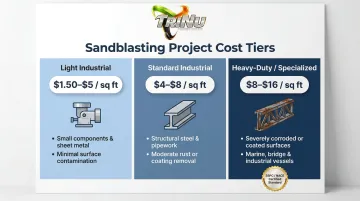
Light Industrial / Small Parts
Small fabrication parts, light structural components, and low-profile surface prep typically cost $1.50–$5 per square foot. These jobs use lower blast pressure and gentler media suited to softer or thinner materials.
Common surfaces: tile, stucco, brick, and thinner metals. Note that small jobs are frequently billed at a flat minimum of $200–$500 to cover equipment setup and transportation, regardless of actual square footage.
Standard Industrial / Commercial
Mid-scale projects such as structural fabrications, machinery components, and concrete surfaces requiring moderate blast intensity cost $4–$8 per square foot.
- Covers metal surfaces, concrete, asphalt, wrought iron, and commercial structures
- Suited to manufacturing components, architectural metalwork, and commercial equipment requiring medium blast depth
Heavy-Duty / Specialized
Aggressive applications—thick rust removal, multilayer coatings, large steel structures—cost $8–$16 per square foot. At this tier, surface prep requirements are typically specified to SSPC or NACE standards for downstream coating performance.
- Targets heavily corroded steel and iron, large structural assemblies, and industrial equipment
- Deep surface profile required; blast intensity and media selection are project-specific
What's Included and What's Not
Base pricing generally includes surface prep labor, abrasive material, and blast time. The following are typically excluded from base quotes:
- Cleanup and containment
- Masking and part disassembly
- Post-blast coating or priming
- Pickup and delivery services
Always confirm scope before accepting a quote.
Key Factors That Affect Sandblasting Costs
Pricing is shaped by a combination of technical requirements, surface conditions, and operational complexity. Understanding each factor helps avoid surprises in the final invoice.
Surface Type and Condition
Softer surfaces like wood, stucco, and tile require gentler media and lower pressures, reducing cost. Harder industrial surfaces such as steel, wrought iron, and concrete demand more aggressive media and higher intensity, increasing cost.
Surface condition multiplies labor time and material consumption. Light contamination removal is faster than blasting heavily corroded surfaces, where multiple layers of rust or coatings require prolonged blast exposure and more abrasive material.
Cost by surface type:
- Tile: $1.50–$3.00/sq ft
- Stucco: $1.50–$3.50/sq ft
- Wood: $2.00–$3.00/sq ft
- Brick: $2.50–$3.00/sq ft
- Concrete: $2.50–$3.50/sq ft
- Wrought iron: $4.00–$8.00/sq ft
- Steel/iron (heavy-duty): $8.00–$18.00/sq ft
Project Size and Accessibility
Total surface area is the primary driver of material and labor costs. Larger projects scale costs proportionally but may benefit from volume efficiencies where per-square-foot rates decrease slightly at higher volumes.
Accessibility matters. Features that slow production rates and raise per-hour costs include:
- Complex geometries: railings, spoked wheels, structural angles
- Tight corners and recessed areas requiring careful repositioning
- Intricate surface details that limit blasting angle and media flow
Blast Intensity Level
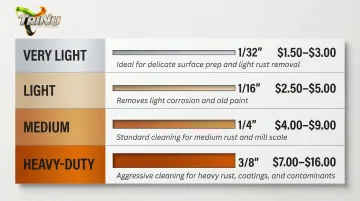
Blast intensity directly determines cleaning depth and cost per square foot. The four standard intensity levels are:
| Intensity Level | Cleaning Depth | Cost per Sq Ft |
|---|---|---|
| Very light | 1/32" | $1.50–$3.00 |
| Light | 1/16" | $2.00–$5.00 |
| Medium | ¼" | $4.00–$8.00 |
| Heavy-duty | ⅜" | $7.00–$16.00 |
Intensity level should match the surface condition and downstream coating requirements. Under-blasting leaves contamination that compromises adhesion; over-blasting wastes time and damages substrates.
Abrasive Media Type
Media choice is driven by surface requirements, not just cost preference. Organic media like corn cobs and walnut shells are gentler on delicate surfaces but slower to cut. Steel grit, aluminum oxide, and silicon carbide remove material faster but carry a higher cost per pound.
Media cost per pound:
- Corn cobs: $0.80–$1.00
- Walnut hulls: $2.00–$3.00
- Glass bead: $1.50–$2.50
- Steel grit: $2.00–$2.50
- Aluminum oxide: $2.00–$2.50
- Copper slag: $4.00–$5.00
- Silicon carbide: $4.00–$4.50
Media reusability also affects overall cost. Steel shot and steel grit can be recycled 25–300 cycles under proper closed-loop systems, dramatically reducing long-run material costs. Organic media like corn cobs and walnut shells are nonrecyclable, requiring fresh material for every job.
Labor, Location, and Cleanup
Labor rates vary by region and project complexity, typically ranging $50–$300 per hour. Urban areas with higher cost of living command premium rates. Specialized jobs requiring precision or confined-space work cost more per hour.
Post-blast cleanup—covering dust collection, media disposal, and site restoration—is frequently an add-on not included in base quotes. Always confirm what is and isn't included before signing off to avoid unexpected charges.
Sandblasting Cost by Method and Media Type
The method used to deliver abrasive to the surface is one of the more significant—and often overlooked—cost variables in any sandblasting project.
Blasting Methods Compared
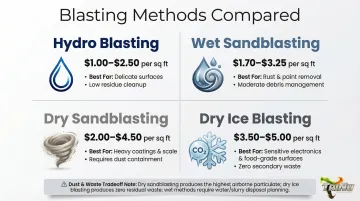
Hydro blasting: $1.00–$2.50/sq ft Uses pressurized water without abrasives. Most affordable option but gentler and slower. Best for light cleaning where aggressive removal isn't needed.
Wet (dustless) sandblasting: $1.70–$3.25/sq ft Mixes sand with water to reduce airborne particles and speed cleaning. Currently the most common method for industrial applications due to reduced dust exposure and faster cleanup. Note: Unless a rust inhibitor is used, water can accelerate corrosion on ferrous metals.
Dry sandblasting: $2.00–$4.50/sq ft Traditional method using dry abrasive media. Costs more due to longer cleanup times and increased PPE requirements from airborne dust.
Dry ice blasting: $3.50–$5.00/sq ft Uses solid CO₂ pellets that sublimate on contact. Leaves no secondary waste but requires adequate ventilation due to CO₂ gas release. Premium method for sensitive equipment and food-grade applications.
Common Abrasive Media and Their Uses
Steel grit: $2.00–$2.50/lb Aggressive angular media for fast paint removal and heavy rust. Highly recyclable (200–300 cycles under proper reclaim systems). Best for metal surfaces requiring deep anchor profile.
Aluminum oxide: $2.00–$2.50/lb Hard, angular media for removing paint and etching prior to coating. Medium reusability (6–8 cycles). Suitable for hard surfaces like granite, steel, and concrete.
Glass bead: $1.50–$2.50/lb Spherical media producing smooth, bright finishes. Medium reusability (4–6 cycles). Best for cleaning, peening, and applications requiring satin finish without aggressive profile.
Walnut shells/corn cobs: $0.80–$3.00/lb Soft organic media for delicate surfaces, removing oil and light coatings without substrate damage. Nonrecyclable. Best for wood, plastic, and soft metals where preservation is critical.
How Media Choice Affects Surface Quality (and Downstream Costs)
The abrasive media used determines the surface profile left behind, and surface profile is critical for coating adhesion performance. An inadequate profile leads to poor coating adhesion, premature failure, and rework.
While coating typically comprises less than 5% of total project cost, repair costs due to premature failure can exceed 100 times the original investment. A $7,000 project that fails and requires full rework can easily cost $14,000 or more the second time around—on top of what you already spent.
TriNu Powder Coating handles both sandblasting and powder coating in-house, which means the surface profile is verified before any finish is applied. When the same team controls prep and coating, there's no gap between what the blaster leaves behind and what the coater needs—a common source of adhesion failures when the two processes are split between vendors. For manufacturers and fabricators in the Tampa Bay area, consolidating both services reduces rework risk and keeps projects on schedule.
How to Estimate the Right Budget for Your Project
Accurate budgeting requires looking beyond the square footage. The goal is to match the method and media to the surface requirement, then account for all associated costs, not just the blast itself.
Key inputs needed for an accurate sandblasting estimate:
- Total surface area in square feet
- Surface condition: light contamination, heavy rust, or multilayer coatings
- Blast intensity needed: very light through heavy-duty
- Media type suited to the substrate and any downstream coating process
- Whether cleanup and masking are included or billed separately
- Post-blast requirements: surface prep only, or integrated finishing
The Case for a Single-Source Finishing Provider
Combining sandblasting and powder coating with a single provider reduces total project cost and coordination risk. Fewer handoffs mean fewer variables, better surface profile control, and tighter scheduling.
TriNu Powder Coating handles surface prep, coating application, and curing under one roof. That means proper profile depth is confirmed before any finish goes on — cutting out the coordination gaps that cause rework. For manufacturers and fabricators in the Tampa Bay area, this integrated approach keeps production schedules on track.
What Most People Get Wrong About Sandblasting Costs
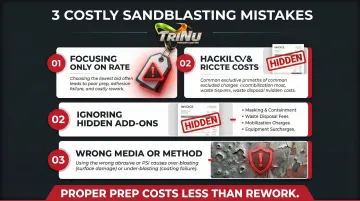
Focusing Only on the Per-Square-Foot Rate
A $2/sq ft quote using light pressure on a heavily corroded surface will either fail or require a second pass. The lowest headline rate rarely delivers the intensity needed for proper cleaning. Intensity-appropriate pricing matters more than the cheapest advertised rate—because inadequate prep leads to rework that costs more than the difference.
Not Accounting for Hidden Add-Ons
Cleanup, masking, disassembly, media disposal, and minimum job charges are frequently excluded from base quotes. Request an itemized quote and ask specifically what is and isn't included. Common line items to confirm:
- Containment and cleanup fees
- Masking and surface protection labor
- Media disposal charges
- Minimum job fees for small orders
Confirming these details upfront prevents invoice surprises and makes provider comparisons accurate.
Choosing the Wrong Media or Method for the Surface
Over-aggressive blasting on soft surfaces causes irreversible damage—warping, etching, or dimensional changes. Under-aggressive blasting on heavy rust leaves contamination that compromises any coating applied afterward. Contractors who understand material behavior, profile requirements, and coating specifications deliver better outcomes—even if their initial quote is higher.
Conclusion
Sandblasting costs vary significantly—from under $2/sq ft for light residential work to $16+/sq ft for heavy-duty industrial applications. The right budget depends on surface type, blast method, media selection, and project scope, not square footage alone.
Understanding each cost component leads to better decisions. Method selection protects your surface. Media selection determines adhesion quality downstream. Together, they determine whether the coating that follows actually holds — or fails early and doubles your costs.
For manufacturers and fabricators requiring dependable surface preparation and finishing, working with a provider who handles blasting, coating, and curing under one roof removes the coordination gaps where quality problems typically start. Fewer handoffs means fewer surprises on the back end.
Frequently Asked Questions
How much does sandblasting typically cost?
Most professional sandblasting projects fall between $1.50 and $16 per square foot depending on intensity and surface type. Total project costs commonly range from $400 to $12,500 or more for larger-scale work, with small jobs often carrying minimum charges of $200–$500.
How do you calculate sandblasting cost?
Cost is calculated by multiplying total surface area (sq ft) by the applicable rate for the blast intensity and media required, then adding labor, cleanup, and any additional services. Professionals often use a test patch on large jobs to confirm production rate before quoting final pricing.
How much does a sandblaster charge?
Contractors typically charge $50–$300 per hour depending on project complexity, region, and equipment, or quote per square foot for larger surface area jobs. Most apply a minimum charge of $200–$500 regardless of project size.
Is sand blasting faster than sanding?
Sandblasting outpaces manual sanding on large or heavily corroded surfaces, covering more area faster and reaching complex geometries hand tools can't access. For small or detail work, manual methods offer better control.
Can you sandblast a pool?
Yes, sandblasting removes calcium scale and old plaster from pool surfaces. Pool tile blasting uses glass beads for tile and walnut shell grit for decks, typically priced by linear foot starting around $10/linear ft—confirm pool-appropriate media with your contractor before starting.
![How Much Does Powder Coating Rims Cost in [2026]?](https://file-host.link/website/trinupowdercoating-kp0fq9/assets/blog-images/8bbea572-74a2-4565-ac79-98d10efdd7b2/1775735510944005_3d500529eea04ea1be6801bc61067eb1/1080.webp)
![Powder Coating Bumper: Total Cost Breakdown & Pricing Guide [2026]](https://file-host.link/website/trinupowdercoating-kp0fq9/assets/blog-images/d0779c55-8f64-4063-a95c-43969e8f015c/1775735472870451_26214f3797cf46bca14f277761db5353/1080.webp)