Introduction
Traditional architectural paints fail after 5-7 years, forcing building designers into expensive maintenance cycles that compromise aesthetics and sustainability goals. Industry analysts project the architectural coatings market will reach $100.28 billion by 2026, driven by demand for finishes that last decades, not years.
Next-generation architectural coatings move beyond conventional paint systems. These advanced finishes combine improved resin technologies with properties like self-cleaning surfaces and nano-engineered durability that extend building performance and aesthetics.
AAMA-certified powder coating systems now deliver 10+ year durability with warranties to match, while intelligent coating formulations actively reduce energy consumption and maintenance costs. This guide examines the coating technologies reshaping architectural design and how they solve real performance challenges.
TLDR
- High-performance coatings last 10-20 years versus 5-7 for traditional paints
- AAMA 2605 certification ensures 10-year durability with minimal fade
- Zero-VOC powder and ultra-low-VOC liquids meet strict environmental standards
- IR-reflective and self-cleaning tech cut maintenance and energy costs
- Choose based on substrate, exposure conditions, and performance needs
What Are Next-Generation Architectural Coatings?
Architectural coatings are protective and decorative finishes applied to building surfaces—both interior and exterior—to enhance aesthetics while providing critical protection against weathering, UV radiation, moisture, and corrosion.
These materials represent the largest segment of the coatings industry, comprising more than half of total U.S. coating volume produced annually.
What Makes a Coating "Next-Generation"?
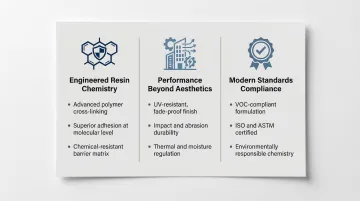
Next-generation systems differ fundamentally from traditional architectural paints through three key advancements:
- Advanced resin technologies: Fluoropolymers and nano-enhanced formulations that dramatically extend service life
- Multi-functional properties: Systems that protect, self-clean, reflect heat, and resist microbial growth
- Enhanced performance: Superior color retention, chemical resistance, and substrate flexibility

Major Coating Categories:
- Liquid coatings - Waterborne acrylics, solvent-based systems, and specialty fluoropolymer formulations
- Powder coatings - Electrostatically applied dry powders offering zero-VOC application and exceptional durability
- Specialty formulations - Self-cleaning, antimicrobial, and thermal-reflective systems
Understanding how these coatings reach your building surfaces helps clarify performance expectations and project planning.
Application Methods
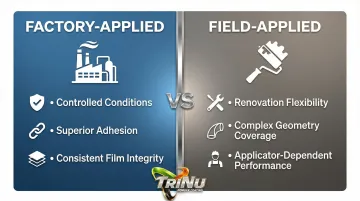
The distinction between field-applied and factory-applied coatings is critical for specification:
- Factory-applied coatings: Pre-finished materials like coil-coated steel and powder-coated aluminum extrusions cured in controlled environments
- Field-applied coatings: On-site systems designed for ambient temperature curing, used for restoration and site-specific conditions
Factory application typically delivers superior durability. Powder coating services like those offered by TriNu Powder Coating apply finishes under controlled conditions with high-temperature curing, achieving performance levels difficult to match in field applications.
The architectural coatings market is valued at $89.8 billion in 2025, with water-borne systems capturing 52% of volume as environmental regulations drive formulation changes worldwide.
Revolutionary Coating Technologies Transforming Design
Powder Coating Systems
Powder coating technology applies electrostatically charged dry powder particles to grounded metal substrates, followed by thermal curing that creates a chemically crosslinked finish. This process delivers superior performance compared to liquid systems while eliminating VOC emissions during application.
AAMA Certification Standards:
The American Architectural Manufacturers Association establishes three performance tiers based on accelerated weathering in South Florida:
| Certification | Performance Level | Exposure Duration | Color Change Limit | Gloss Retention |
|---|---|---|---|---|
| AAMA 2603 | Good | 1 year | Slight change | Not specified |
| AAMA 2604 | High | 5 years | Max 5 ΔE | Min 30% |
| AAMA 2605 | Superior | 10 years | Max 5 ΔE | Min 50% |
AAMA 2605 represents the highest performance tier, requiring coatings to maintain color stability and gloss after a full decade of Florida's intense UV exposure, salt spray, and humidity.
These certification standards translate directly into architectural benefits:
- AAMA 2605 systems deliver 10+ year performance with minimal maintenance requirements
- Powder coatings emit virtually no volatile organic compounds during application, eliminating expensive emission control equipment
- Electrostatic application ensures consistent film thickness, even on complex geometries
- Modern powder systems achieve metallic effects, wood-grain textures, and custom colors previously difficult with liquid coatings

TriNu Powder Coating has specialized in architectural powder coating applications for over 10 years, utilizing AAMA certified products and maintaining QC Certified Program compliance for demanding architectural projects.
Advanced Liquid Coating Technologies
PVDF Fluoropolymer Coatings:
Polyvinylidene fluoride (PVDF) coatings—sold as Kynar 500® and Hylar 5000®—set the standard for liquid architectural systems. 70% PVDF formulations meet AAMA 2605 specifications and deliver documented 20+ year lifespans.
Key performance attributes:
- Withstand 4,000 hours of salt spray testing (ASTM B117) for extreme weather resistance
- Strong carbon-fluorine bonds resist UV degradation and maintain color
- Maintain integrity when exposed to industrial atmospheres and coastal environments
FEVE Fluoropolymer Systems:
Fluoroethylene vinyl ether (FEVE) resins offer an alternative to PVDF with distinct advantages. FEVE coatings meet AAMA 2605 requirements while providing higher gloss finishes and ambient temperature curing capability, making them suitable for both factory and field applications.
Silicon-Modified Polyester (SMP):
SMP formulations deliver reliable performance for AAMA 2604 applications, balancing cost and durability for projects requiring 5-year performance guarantees. These systems provide excellent hardness and scratch resistance for high-traffic architectural elements.
High-Performance Acrylic Latex:
Advanced waterborne systems using Kynar Aquatec® technology enable field-applied coatings to achieve durability comparable to factory-applied PVDF. Testing demonstrates these systems maintain color and resist chalking after 17 years of South Florida exposure, meeting AAMA 2605 requirements while offering low-VOC application.

Intelligent and Functional Coatings
Self-Cleaning Lotus-Effect® Technology:
Biomimetic coatings replicate the microstructure of lotus leaves, creating superhydrophobic surfaces where water beads up and rolls off, carrying dirt particles away naturally.
This passive cleaning mechanism reduces maintenance requirements while providing natural protection against algae and fungal growth without biocide films.
Photocatalytic Titanium Dioxide (TiO2):
Nano-sized TiO2 particles activated by UV light create electron-hole pairs that decompose organic pollutants and dirt.
Research shows degradation rates of approximately 67% for organic contaminants, meaning these coatings actively purify surrounding air while maintaining surface cleanliness.
IR-Reflective Cool Roof Systems:
Advanced pigment technologies reflect infrared radiation while maintaining desired visible colors. Highly reflective coatings reduce membrane temperatures to within 15°F of ambient, significantly lowering cooling loads and contributing to LEED Heat Island Reduction credits.
Nano-Technology Enhancements:
Engineered nanoparticles deliver enhanced scratch resistance (improved pencil hardness ratings), antimicrobial properties for healthcare applications, and superior abrasion resistance for high-traffic areas.

Performance Features That Enable Design Innovation
Enhanced Color Stability:
Next-generation coatings enable architects to specify bold, saturated colors with confidence. AAMA 2605-certified systems maintain color change below 5 Delta E (Hunter scale) after 10 years of extreme exposure.
Advanced UV-resistant pigments prevent the chalking and fading that affect traditional paints within 5-7 years. Providers like TriNu Powder Coating use AAMA-certified products to ensure this long-term color retention for architectural applications.
Superior Weather Resistance:
Beyond color stability, modern coating systems deliver comprehensive environmental protection through rigorous accelerated testing:
- Salt spray resistance - 4,000+ hours (ASTM B117) for coastal applications
- Cyclic corrosion - 2,000+ hours (ASTM G85) simulating industrial atmospheres
- Thermal cycling - Repeated freeze-thaw cycles without cracking or delamination
- Humidity resistance - Extended exposure to 95%+ relative humidity
Expanded Texture and Finish Options:
Contemporary systems offer unprecedented design flexibility:
- Ultra-smooth to coarse aggregated textures
- Metallic and mica effects achievable as single-coat systems
- Wood-grain simulations for metal substrates
- Custom textures matching stone, granite, or concrete
Crack-Bridging and Flexibility:
Advanced formulations accommodate substrate movement and thermal expansion. Coatings meeting ASTM D522 (Mandrel Bend) testing maintain film integrity during expansion and contraction cycles.
This flexibility prevents the cracking and peeling that compromise both aesthetics and protection.
Chemical and Stain Resistance:
Next-generation systems resist graffiti, industrial pollutants, and biological staining. This chemical resistance simplifies maintenance in high-traffic areas.
The result: extended time between recoating cycles and reduced lifecycle costs.
Sustainability and Environmental Benefits of Modern Coatings
Modern architectural coatings balance environmental responsibility with performance demands. From VOC reductions to energy efficiency, today's formulations deliver measurable sustainability benefits without compromising durability or aesthetics.
Regulatory VOC Limits
The EPA National AIM Rule establishes baseline VOC limits of 250 g/L for flat coatings and 380 g/L for nonflat formulations. However, regional regulations are significantly stricter. California's SCAQMD Rule 1113 limits flat coatings to just 50 g/L—five times more stringent than federal standards.
Manufacturers have developed three primary approaches to meet these increasingly strict requirements:
- Powder coatings - Zero VOC emissions during application
- Waterborne acrylics - Achieve 50 g/L to meet strictest regional standards
- High-solids systems - Reduced solvent content while maintaining performance
Powder coating services like those offered by TriNu Powder Coating eliminate VOC emissions entirely during application, making them the preferred choice for architectural projects in regions with stringent air quality regulations.
Energy Efficiency Contributions
Cool roof coatings with high solar reflectance reduce building energy consumption by minimizing heat absorption. These specialized formulations deliver measurable benefits:
- Reduce cooling loads by reflecting infrared radiation
- Lower membrane temperatures by approximately 15°F
- Qualify for LEED Energy & Atmosphere credits
- Mitigate urban heat island effects in dense developments
Extended Service Life
The most significant environmental benefit comes from durability. AAMA 2605 coatings lasting 10-20 years versus traditional paints requiring recoating every 5-7 years means:
- Reduced material consumption over building lifecycle
- Fewer maintenance interventions and associated disruption
- Lower cumulative VOC emissions from repeated applications
- Decreased waste generation from failed coatings
For architectural applications, this extended service life translates to lower total environmental impact. A single application of AAMA-certified powder coating can outlast three cycles of conventional paint, cutting cumulative emissions and material waste by two-thirds.

Bio-Based and Recycled Content
Innovation extends beyond performance chemistry to material sourcing. Soybean oil-based resins in emerging formulations enable low-temperature curing while maintaining AAMA compliance, reducing energy consumption during application.
Some systems incorporate recycled content, with SCAQMD defining "recycled coatings" as containing at least 50% secondary and post-consumer materials. These bio-based and recycled formulations represent the next frontier in sustainable architectural finishing.
Applications Across Building Types
Commercial and Institutional Buildings
Office towers, schools, hospitals, and government facilities demand coatings that deliver long-term aesthetic consistency across large façades while reducing operational costs. These projects prioritize compliance with green building standards like LEED and WELL, plus durability in high-traffic public areas.
AAMA 2605 powder coatings and PVDF liquid systems dominate this segment. Prominent projects like 55 Hudson Yards in New York feature nearly 20,000 pounds of FEVE powder coating on curtain walls.
Residential Applications
While commercial projects emphasize longevity, residential buildings balance performance with cost considerations:
- AAMA 2604 systems for projects requiring 5-year performance
- Field-applied waterborne systems for renovation and restoration
- Custom colors matching architectural styles and neighborhood character
- Weather resistance appropriate to regional climate conditions
Single-family homes, multi-family developments, and mixed-use buildings typically use these more economical coating systems without sacrificing quality.
Industrial and Specialized Facilities
Manufacturing plants and specialized structures face harsher conditions requiring enhanced chemical resistance. These applications include coatings withstanding industrial atmospheres, military specification systems for defense facilities, and marine-grade formulations for coastal structures.
Antimicrobial coatings serve food processing and pharmaceutical facilities where contamination control is critical. TriNu Powder Coating has developed specialized capabilities across military spec and marine-grade applications through work on these complex projects.
Selecting the Right Architectural Coating System
Key Selection Criteria:
Successful coating specification requires evaluating multiple factors:
Substrate Type:
- Aluminum: AAMA 2603/2604/2605 powder or liquid systems
- Steel: Primer + topcoat systems with corrosion inhibitors
- Concrete/Masonry: Breathable waterborne systems allowing moisture vapor transmission
- Wood: Flexible formulations accommodating dimensional changes
Exposure Conditions:
- Coastal environments: Salt spray resistance, AAMA 2605 recommended
- Urban/industrial: Chemical resistance, easy-clean properties
- High-altitude: Enhanced UV protection for increased solar radiation
- Extreme climates: Thermal cycling resistance, crack-bridging properties
Performance Requirements:
Match certification standards to project expectations:
- AAMA 2605 - Monumental projects, 10+ year performance guarantee
- AAMA 2604 - Commercial buildings, 5-year performance
- AAMA 2603 - Interior or protected applications, 1-year standard

Relevant Testing Standards:
AAMA specifications provide the foundation, but additional standards offer deeper validation:
- ASTM D3730 - High-performance interior architectural wall coatings
- ASTM D5146 - Solvent-borne architectural coating testing
- ASTM D5324 - Water-borne architectural coating evaluation
Powder vs. Liquid Selection:
Choose powder coating when:
- Sustainability and zero-VOC application is priority
- Factory-applied finish on metal substrates
- Superior scratch resistance required
- High transfer efficiency desired (minimal waste)
Choose liquid coating when:
- Field application or touch-up needed
- Substrate cannot withstand baking temperatures
- Extremely bright metallics specified
- Unlimited custom color matching required
Working with Experienced Applicators:
Coating performance depends equally on formulation and application expertise. Partner with applicators who demonstrate:
- Understanding of architectural specifications and AAMA standards
- QC certification programs ensuring consistent quality
- Technical development support for custom applications
- Experience with substrate-specific preparation and pretreatment
With over 10 years of architectural coating experience, TriNu Powder Coating applies this expertise through AAMA certified products and QC-certified processes. Their partnership approach combines technical knowledge with hands-on support for demanding architectural projects.
Frequently Asked Questions
What are architectural coatings and what are the common types?
Architectural coatings are protective and decorative finishes for building surfaces. Common types include acrylic latex (waterborne), powder coatings (electrostatically applied), alkyds (oil-based), and PVDF fluoropolymers for extreme durability.
What is Rule 1113 for architectural coatings?
SCAQMD Rule 1113 is a California regulation establishing VOC limits for architectural coatings, with some categories limited to just 50 g/L—far stricter than federal standards. It serves as a model for green building standards nationwide.
What is the 80/20 rule for coatings?
Approximately 80% of coating performance comes from 20% of the formulation—specifically the resin system. This makes selecting the right resin chemistry (PVDF vs. polyester) your most critical specification decision.
What is the difference between AAMA 2604 and 2605 certifications?
AAMA 2604 requires 5 years of South Florida exposure with 30% gloss retention, while AAMA 2605 requires 10 years with 50% gloss retention. Both limit color change to <5 Delta E, but 2605 offers superior long-term durability.
How do self-cleaning coatings work?
Two technologies enable self-cleaning: hydrophobic surfaces where water beads up and carries away dirt, and photocatalytic coatings using titanium dioxide that breaks down contaminants when exposed to UV light.
Are powder coatings suitable for all architectural applications?
Powder coatings excel for factory-applied finishes on metal substrates, offering zero VOC emissions and superior durability. However, they're not suitable for field application or substrates that can't withstand 350-400°F curing temperatures.


![Powder Coating Bumper: Total Cost Breakdown & Pricing Guide [2026]](https://file-host.link/website/trinupowdercoating-ie2q5a/assets/blog-images/02fb4cbe-2525-42fd-ad0d-d7a3f8e43ddf/1771452425429224_c312ca6e1dd14305bb5f830de7b14620/1771452425429224_c312ca6e1dd14305bb5f830de7b14620.webp)