What is the best coating for titanium?
The best coating for titanium depends on the part’s function, tolerance requirements, environment, and whether it is flight-critical. TiN, PVD, anodizing, and specialized aerospace coatings are common options for titanium. TriNu Powder Coating focuses on controlled surface preparation and powder coating for appropriate aerospace, aviation, tooling, ground-support, and non-flight-critical components where durable industrial finishes are required.
How long does TiN coating last?
TiN coating life depends on coating thickness, surface preparation, part geometry, operating temperature, friction, wear exposure, and maintenance conditions. In suitable applications, TiN can provide long-lasting wear resistance, but it is typically applied by specialized vacuum deposition providers. For powder-coated aerospace support components, TriNu emphasizes proper blasting, controlled application, curing, and inspection to maximize finish durability.
What is the difference between nitriding and PVD?
Nitriding is a thermochemical surface treatment that diffuses nitrogen into metal to improve hardness, wear resistance, and fatigue performance. PVD, or physical vapor deposition, applies a thin coating such as TiN in a vacuum chamber. Nitriding changes the surface layer of the material, while PVD adds a deposited coating. Powder coating is different again, providing a durable protective finish.
Do you coat flight-critical titanium aerospace parts?
TriNu Powder Coating supports aerospace and aviation manufacturers with coating for tooling fixtures, brackets, hangar equipment, ground-support frames, structural sub-assemblies, and non-flight-critical OEM components. Flight-critical titanium components may require specialized aerospace approvals, traceability, testing, and coating systems beyond standard powder coating. We review project requirements upfront to determine whether our process is appropriate.
How do you prepare titanium or aerospace metal before coating?
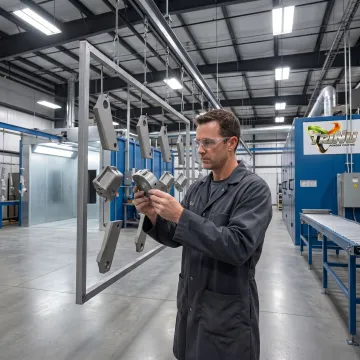
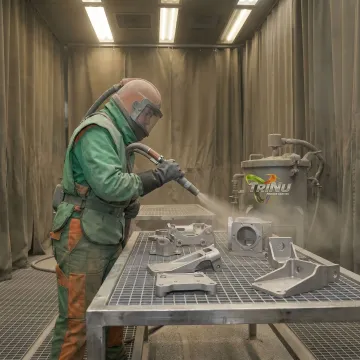
Surface preparation begins with reviewing the substrate, specification, and final coating requirements. Depending on the part, TriNu may use abrasive, grit, sand, or shot blasting to remove contaminants and create a controlled surface profile. Proper preparation is essential because coating performance depends heavily on cleanliness, adhesion, consistent profiling, and avoiding shortcuts before application and cure.
What size aerospace components can you coat?
TriNu operates a 10' × 10' × 30' production oven, allowing the team to coat oversized assemblies such as tooling frames, ground-support equipment, skid frames, brackets, long structures, and large industrial components. This capacity is especially useful for manufacturers and fabricators with parts that exceed the limits of smaller finishing shops.
How is pricing determined for aerospace-grade coating work?
Pricing is project-specific and based on part size, quantity, substrate condition, preparation method, masking requirements, coating system, inspection needs, and logistics. Large or heavily contaminated components may require additional preparation time. TriNu provides quotes after reviewing the details so manufacturers can plan production costs accurately and avoid surprises during the finishing process.
Do you offer pick-up and delivery for coating projects?
Yes. TriNu offers pick-up and delivery across the Tampa Bay region for qualifying projects, including oversized fabrications, palletized production runs, and recurring OEM work. This logistics support helps reduce handling risk, simplify coordination, and keep parts moving from fabrication through surface preparation, coating, inspection, and return delivery with fewer workflow interruptions.