How much is bead blasting?
Bead blasting costs vary based on part size, complexity, material type, surface condition, and project volume. Factors include the level of surface contamination, required finish profile, and whether the work is part of a larger finishing project. At TriNu, we provide transparent quotes based on your specific requirements. For accurate pricing tailored to your project, contact us with part dimensions and quantity details for a detailed estimate.
What is bead blasting and how does it work?
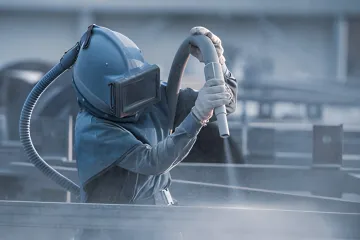
Bead blasting is a surface preparation process that propels fine glass or ceramic beads at high velocity against a metal surface using compressed air. The spherical media gently removes contaminants, rust, and oxidation while creating a uniform matte finish without changing part dimensions. Unlike angular media, beads provide a controlled, consistent surface profile ideal for preparing components for powder coating or finishing applications requiring precise tolerances and smooth surface texture.
What materials can be bead blasted?
Bead blasting is suitable for most metals including steel, stainless steel, aluminum, brass, copper, and titanium. It's particularly effective for softer metals and precision components where dimensional integrity must be maintained. The process works well on castings, machined parts, fabricated assemblies, and architectural components. Material thickness, hardness, and intended application determine blasting parameters. Our team evaluates each project to ensure the process matches your material specifications and performance requirements.
How long does the bead blasting process take?
Turnaround time depends on project scope, part quantity, size, and current production schedule. Single small parts may be completed within a day, while large-volume or oversized components require additional time for proper handling and quality control. At TriNu, we maintain dependable turnaround times that support production planning—typically completing standard projects within 3-5 business days. Rush services may be available for urgent needs. We communicate clear timelines upfront and keep you informed throughout the process.
Do you offer pick-up and delivery for bead blasting services?
Yes, we provide pick-up and delivery services throughout the Tampa Bay area including Clearwater, Tarpon Springs, and New Port Richey. This logistics support helps manufacturers and fabricators maintain production schedules without transportation disruption. Our team handles parts with care during transit and coordinates timing to align with your project deadlines. Pick-up and delivery details are arranged during project planning to ensure seamless service from surface preparation through final finishing and return.
What's the difference between bead blasting and sandblasting?
Bead blasting uses smooth, spherical glass or ceramic beads that create a uniform satin finish without dimensional change—ideal for precision parts and softer metals. Sandblasting uses angular silica particles that aggressively remove material and create deeper anchor profiles, suitable for heavy rust removal and rough surfaces. Beads are gentler, reusable, and produce less dust. The choice depends on substrate condition, required finish texture, coating specifications, and part tolerances. We recommend the appropriate media for your application.
Is bead blasting necessary before powder coating?
Proper surface preparation is critical for powder coating adhesion, durability, and long-term performance. Bead blasting removes contaminants, oxidation, and old coatings while creating a clean anchor profile that allows powder to bond mechanically and chemically. In Tampa Bay's humid coastal environment, thorough surface prep prevents premature coating failure and corrosion. While alternative prep methods exist, bead blasting provides consistent, repeatable results that support quality standards and warranty requirements for industrial applications requiring lasting finishes.
What quality standards do you follow for bead blasting?
We follow proven surface preparation processes with controlled blasting parameters, verified surface cleanliness, and inspection before release. Our work supports QC Certified Program compliance, technical development specifications, and AAMA standards for architectural applications. Every job is handled with process-driven quality control—no shortcuts. Surface profiles are evaluated for consistency, contamination removal is verified, and parts are inspected to meet project specifications. We document procedures and maintain repeatability across production runs for manufacturers requiring certified quality control.